The Method
Rhythm. Tone. Feel.
Rhythm. Tone. Feel. Every guitarist is expected to figure these out on their own — over years, maybe a decade, maybe never. The approach here is different. These aren't things you absorb by accident. They're things you can study, break down, and learn — the same way you'd learn anything else.
Learning guitar has a hump. Unlike piano, where pressing a key produces a note, guitar requires you to get four or five things right simultaneously just to make a single clean sound. The way most beginners are taught makes sure that hump is as large as possible.
The standard opening curriculum throws beginners into C, G, and G7 — physically demanding shapes taught before the hand has any strength or conditioning, with all the focus on the left hand while the right hand just waits.
A lot of people quit at this point. Not because they lack talent. Because they were set up to fail.
The goal here is to push each person as fast as their talent will allow — starting with achievable chords, getting them strumming immediately, sounding musical from the first session. The hump doesn't disappear. But it doesn't have to be a wall.
"I recently told a new student to strum harder. She kept holding back — being polite. I reminded her she was playing an acoustic guitar. You can beat on it. It won't break. The moment she committed physically, everything changed. Timid body language produces timid music."
Most intermediate players have the same story. They learned the pentatonic scale in one or two keys, tried to learn all five positions, got lost, and retreated back to position one. They can play — but they feel locked in certain keys, and moving to others requires mental calculations that interrupt the music. Something like D♭ feels like a different instrument entirely.
This isn't a discipline problem. It's a method problem.
Traditional scale instruction teaches shapes and positions first — here are the patterns, memorize them — and leaves the actual notes as an afterthought. The result is players who know their way around one neighborhood but get lost the moment they cross town.
165 dots per key. Multiply by 12. That's insanity.
The traditional method teaches two-octave shapes — about 15 notes each, roughly 11 shapes on the neck. That's 165 dots to memorize for each key and its modes. Multiply by 12 keys and you're into the thousands. Meanwhile, there are only 78 notes on the neck up to the 12th fret. You already know half of them — E and A strings for barre chords, high E mirrors low E. Learn three more strings and you have the whole neck.
The method: start at the open string, apply the half/whole step formula, find any note yourself. No chart, no diagram. Once you can find them, there's a systematic approach to lock them in. From there, if you know the notes of C major and how scales are built, you can play C major anywhere. G is just C with an F# — one note changes. You also know D Dorian, E Phrygian, and every other mode. Not because you memorized seven new shapes — because you understand the system.
78 meaningful notes beats 10,000 dots that don't.
There's another problem with position playing that doesn't get talked about enough: when you're anchored to a position, running the pattern up and down, you can hear it.
It sounds correct. It doesn't sound musical.
The same goes for CAGED and modes. These are legitimate learning tools — useful frameworks for understanding how the fretboard is organized. But somewhere along the way they got sold as complete methods, as if mastering the system was the same as playing great music. David Gilmour is not a CAGED player. He's a great player who relies on chord tones, who hears the melody before he plays it, who chooses every note. There are no great CAGED players. There are no great modes players. There are just great guitar players, most of whom have moved well past thinking about any of this while they play.
Shapes get you started. Understanding is power. The patterns serve the music — not the other way around.
I learned the traditional way. I know exactly where it leads and where it gets stuck. This is the way out.
Strumming is Drumming.
It is the most efficient way to communicate that you get it.
The single most important fundamental on guitar has nothing to do with chords, scales, or theory.
Spend enough time on YouTube and Instagram and you'll start to think that unlocking the neck, mastering CAGED, and playing exactly like John Mayer are the fundamentals. They're not. Nobody works on their tennis backhand before they can walk without tripping. Strumming is the walk.
Drummers learn rudiments. When a drummer sees 16th notes, they know exactly what to do and every option available to them. There's a structured system for developing rhythm as a distinct skill. Guitarists get told to practice their scales and hope for the best.
To some teachers, left hand chords equal value. The more chords you know, the more you're learning. But you can get thousands of chords online for free — that's not the work. The work isn't memorizing 2,000 rhythmic patterns either. It's understanding a concept. And everyone who struggles with this concept is capable of understanding it. It just has to be unlocked in a way they can understand — and that's different for everyone.
Poor strumming will literally cap your development at every level. Complex voicings with bad strumming is still bad guitar playing.
There are roughly three kinds of people here. About 20% of players just get it — nobody had to explain it, it was obvious. They probably don't even know they have it because they've never struggled with something that feels completely natural. Then there are drummers, who almost always understand it immediately because they already think in rhythm. Everyone else — the other 80% — either doesn't intuitively grasp it or struggles with it to some degree. This is not a talent problem.
Teaching someone who may be struggling is the most difficult task any educator encounters. It requires a certain patience and skills that many teachers may lack. So when a student isn't getting it, they work on it for a session or two and quietly move on. One day it's just — hey, wanna try Crazy Train? And that's that. The most important fundamental gets dropped from the curriculum and nobody says anything. That's why there are so many guitar players out there who just don't sound good. Not because they lack talent. Because this was never taught in a way that they could understand it.
Every student here works on this until it's understood. At their pace. With whatever it takes to make it click. Then we build the habit so it stays that way. That doesn't mean we work on it exclusively — but this skill is too important to skip. My job isn't to give vast volumes of information. It's to make people sound good when they play.
Strumming isn't one skill. It's a layered set of decisions, each one building on the last.
Which stroke goes where, and why — not from a chart, but from feel. When you understand that downstrokes and upstrokes have completely different characters, you stop strumming randomly and start making rhythmic decisions. This is what drummers call rudiments. This is where we start.
Think of it this way: a drummer's kick drum, snare, and hi-hat all have distinct voices and distinct roles. Your strum is your hi-hat. The bottom strings are your kick. The top strings are your snare. Once you hear the guitar as a drum kit, strumming stops being about moving your hand and starts being about making music.
Move your picking hand an inch toward the neck and your tone changes completely. Most players find one spot and stay there forever. String location is a tone control that's always available, costs nothing, and responds instantly. Gear can't replicate it.
The front edge of the pick, the back edge, and the side each have their own musical and technical utility — completely different sounds, available on every note. They are also your greatest friend in not fighting the strings. Pick always slipping out of your hand or getting rotated? Most players have never been told these options exist. Those who do know almost always figured it out on their own, over a long period of time. That's how I learned.
The scalpel. The brush. The machete. The sledgehammer. Every playing context calls for a different physical approach — different force, different arc, different relationship to the strings. Using the same tool for everything is why so many players sound technically correct but not quite right.
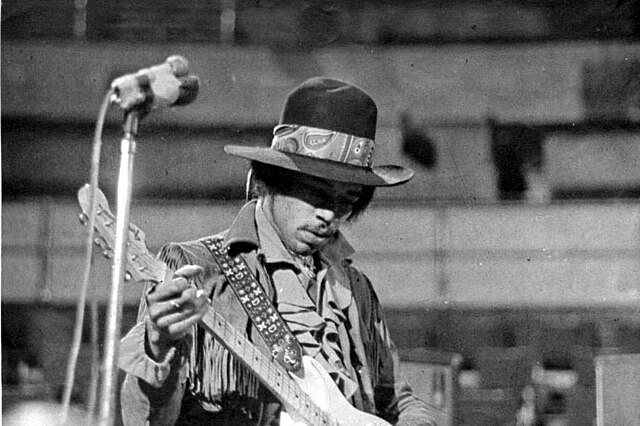
You cannot play SRV or Hendrix with a scalpel where the moment calls for a machete.
Most players use the same attack for everything — leads, rhythm, funk, blues. That's like using a scalpel to chop wood. Every playing context demands a different tool.
Precise, controlled, minimal movement. For leads, single note runs, and shredding where accuracy is everything.
Fast pentatonic runs, precise melodic lines
Longer, flowing strokes across the strings. For open chord strumming and passages that need to breathe and ring.
Acoustic ballads, open chord patterns
Aggressive, rhythmic, committed. For funk, R&B, and rock where the groove needs to cut through everything.
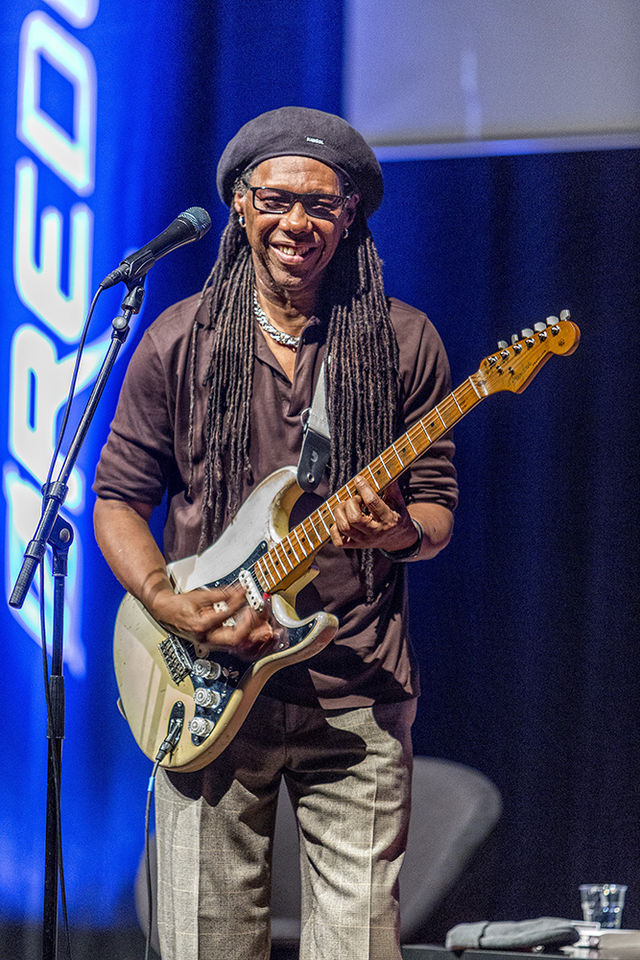
Le Freak, Hendrix rhythm playing, hard rock riffs
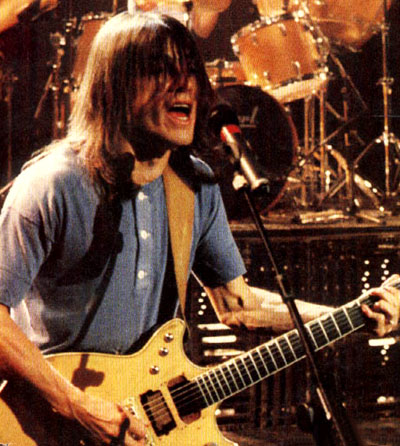
Full commitment, maximum impact. For power chords and moments where the physical force of the attack is the whole point.
AC/DC, heavy rock, drop-tuned riffing
One student came to Matt after three years with another instructor. He had 50 songs tabbed out. He couldn't play any of them.
A free 15-minute call with Matt — whether you're a complete beginner, intermediate, or advanced player.
Book a Free 15-Minute Consultation